Source: Black Agenda Report
The same activists who are working to defund the police are also part
of a collective movement to bring an end to neoliberal capitalism.
“The call for law and order repeatedly served as a
smokescreen for racist and militarized police practices that equated
Black behavior with criminality.”
The words “I can’t breathe” were not only uttered by Eric Garner and
George Floyd as they were murdered by police. They were also uttered by over 70 others who died in law enforcement custody over the past decade after saying those same three words, according to the The New York Times.
Policing in the United States is a force of racist violence that is
entangled at the core of the capitalist system. As Robin D.G. Kelley pointed out on Intercepted With Jeremy Scahill ,
capitalism and racism are not distinct from one another: “If you think
of capitalism as racial capitalism, then the outcome is you cannot
eliminate capitalism, overthrow it, without the complete destruction of
white supremacy, of the racial regime under which it’s built.”
Police in the United States act with impunity in targeted
neighborhoods, public schools, college campuses, hospitals, and almost
every other public sphere. Not only do the police view protesters, Black
and Indigenous people, and undocumented immigrants as antagonists to be
controlled, they are also armed with military-grade weapons. This
police militarization is a process that dates at least as far back as
President Lyndon Johnson when he initiated the 1965 Law Enforcement
Assistance Act, which supplied local police forces with weapons used in
the Vietnam War. The public is now regarded as dangerous and suspect;
moreover, as the police are given more military technologies and weapons
of war, a culture of punishment, resentment and racism intensifies as
Black people, in particular, are viewed as a threat to law and order.
Unfortunately, employing militarized responses to routine police
practices has become normalized. One consequence is that the federal
government has continued to arm the police through the Defense Logistics
Agency’s 1033 Program, which allows the Defense Department to transfer
military equipment free of charge to local enforcement agencies.
“Police militarization is a process that dates at least as far back as President Lyndon Johnson.”
The scope of the 1033 Program is alarming given that “Since its
inception, more than 11,500 domestic law enforcement agencies have taken
part in the 1033 Program, receiving more than $7.4 billion in military
equipment,” according to CNBC .
There is also the federally run 1122 Program which allows the police to
purchase military equipment at the same discounted rate as the federal
government. In addition, there is the Homeland Security Grant Program,
which provides funds for local police departments to buy military-grade
armaments and weapons. The military-grade weapons provided through these
federal programs include armored vehicles, assault rifles, flashbang
grenade launchers, bomb-detonating robots, and night vision items.
Arming the police with more powerful weapons reinforced a culture that
taught police officers to learn, think and act as soldiers engaged in a
war. Moreover, as Ryan Welch and Jack Mewhirter write in The Washington Post , the more militarized and armed the police are, the greater the increase in civilian deaths. As they point out:
“Even controlling for other possible factors in police violence (such
as household income, overall and black population, violent-crime levels
and drug use), more-militarized law enforcement agencies were
associated with more civilians killed each year by police. When a county
goes from receiving no military equipment to $2,539,767 worth (the
largest figure that went to one agency in our data), more than twice as
many civilians are likely to die in that county the following year.”
This arming and militarizing of the police were intensified after the 9/11 attacks and privileged a police ethos defined by “the use of violent tactics and non-negotiable force over compromise, mediation, and peaceful conflict resolution .” Police brutality is endemic to American history. As Mariame Kaba argues ,
There is not a single era in United States history in which the
police were not a force of violence against Black people. Policing in
the South emerged from the slave patrols in the 1700 and 1800s that
caught and returned runaway slaves. In the North, the first municipal
police departments in the mid-1800s helped quash labor strikes and riots
against the rich. Everywhere, they have suppressed marginalized
populations to protect the status quo.
“The more militarized and armed the police are, the greater the increase in civilian deaths.”
Police brutality cannot be separated from the lethal nature of white
supremacy, and in its recent incarnations became “the war on crime.”
Under President Nixon and every American president after him, the war on
crime continued to expand and intensify into a war on Black
communities. The call for “law and order” repeatedly served as a
smokescreen for racist and militarized police practices that equated
Black behavior with criminality and authorized the use of force against
them.
As the reach of the culture of punishment expanded, its targets
included protesters, immigrants, and those individuals and groups
marginalized by class, religion, ethnicity and color as the other — an
enemy. This is the organizing principle of a war mentality adopted by
the police throughout the United States in which the behavior of Black
people and other marginalized communities is criminalized. It comes as
no surprise that as one study reports ,
“Police kill, on average, 2.8 men per day…. Police homicide risk is
higher than suggested by official data. Black and Latino men are at
higher risk for death than are White men, and these disparities vary
markedly across place.”
A militarized culture breeds violence. It wastes money on the
security industries and policing, and drains money from the socially
necessary programs that could actually prevent violence. Violence is
both shocking and part of everyday life, especially for those who are
poor, Black, Indigenous, trans, disabled and/or otherwise
disenfranchised. In the last few decades, Francesca Mari writes ,
“the US has had the highest homicide rate of any high-income country,
and according to preliminary data released in March by the FBI, it rose
by 25 percent in 2020, when an estimated 20,000 people were murdered —
more than fifty-six a day.”
Police brutality became code for a more violent expression of racism
that emerged with the rise of neoliberalism in the 1980s. This was
especially obvious under the Trump administration as the racist adoption
of both white supremacy and a wave of police brutality against Black
people and undocumented immigrants was presented to the American public
as a badge of honor and an act of civic pride.
“The US has had the highest homicide rate of any
high-income country, and according to preliminary data released in March
by the FBI, it rose by 25 percent in 2020.”
As the power of the police expanded, along with their unions, social
programs were defunded. These included job programs, food stamp
programs, health centers, healthcare programs and early childhood
education. In many states, more money was spent on prisons than on
colleges and universities, as documented by Ruth Gilmore in her book Golden Gulag: Prisons, Surplus, Crisis, and Opposition in Globalizing California.
Targeted cities inhabited mostly by poor Black and brown people were
now under siege as the war on poverty morphed into the war on crime.
Instead of “fighting black youth poverty,” the new crop of white
supremacist politicians fought what Elizabeth Hinton called “fighting
black youth crime” in her book From the War on Poverty to the War on Crime.
As Jim Crow re-emerged in more punitive forms, immigration was
criminalized, the war on youth of color intensified, and the culture of
punishment began to shape a range of institutions. This was particularly
evident as mass incarceration became a defining organizing institution
of the narrow racially inspired policies of criminalization in the U.S.
and, by default, the prison its most notorious welfare agency. The U.S.
has been in the midst of an imprisonment binge since the1960s. As Angela
Y. Davis writes in Abolition Democracy:
But even more important, imprisonment is the punitive solution to a
whole range of social problems that are not being addressed by those
social institutions that might help people lead better, more satisfying
lives. This is the logic of what has been called the imprisonment binge:
Instead of building housing, throw the homeless in prison. Instead of
developing the educational system, throw the illiterate in prison. Throw
people in prison who lose jobs as the result of de-industrialization,
globalization of capital, and the dismantling of the welfare state. Get
rid of all of them. Remove these dispensable populations from society.
According to this logic the prison becomes a way of disappearing people
in the false hope of disappearing the underlying social problems they
represent.
“Mass incarceration became a defining organizing
institution of the narrow racially inspired policies of criminalization
in the U.S.”
The numbers speak for themselves. Historian Khalil Gibran Muhammad makes this clear in his new preface to The Condemnation of Blackness: Race, Crime, and the Making of Modern Urban America. He writes:
By population, by per capita incarceration rates, and by
expenditures, the United States exceeds all other nations in how many of
its citizens, asylum seekers, and undocumented immigrants are under
some form of criminal justice supervision…. The number of African
American and Latinx people in American jails and prisons today exceeds
the entire populations of some African, Eastern European, and Caribbean
countries.
Michelle Brown has argued persuasively in her book The Culture of Punishment that
the rise of police violence, especially against people of color,
indicates that increases in the scale of punishment cannot be abstracted
from a parallel rise in both power and apparatuses of punishment —
extending from the law enforcement, military services, private security
forces, immigration detention centers, to intelligence networks and
surveillance apparatuses.
Moreover, the culture of punishment increasingly defines both
subjects and social problems through the registers of punishment, pain
and violence. How else to explain the actions of the South Carolina Gov.
Henry McMaster, who in 2021 signed legislation giving people on death
row the grotesque choice between a firing squad and electrocution . Frank Knaack, the executive director of South Carolina’s ACLU, stated that
capital punishment and the new law “evolved from lynchings and racial
terror, and it has failed to separate its modern capital punishment
system from this racist history.”
Policing cannot be understood outside of the history of criminogenic
culture and a racist punishing state marked by both staggering
inequities in wealth, income and power, as well as a collective mindset
in which those considered non-white are considered less than human,
undeserving of human rights, and viewed as disposable. The journalist
Robert C. Koehler rightly argues that underlying both the larger culture
and the culture of policing is a deeply ingrained white supremacy
marked by a system of growing inequalities in which economic rights do
not match political and individual rights. Koehler writes :
it is racism that is the trigger that disproportionately escalates
police encounters with people of color. However, even more sadly, it is
systemic racism that normalizes it, or legitimates it, making it largely
acceptable to white American eyes and consciences. For it is not only
the police who have this problem, but our entire society.
“Underlying both the larger
culture and the culture of policing is a deeply ingrained white
supremacy marked by a system of growing inequalities.”
As neoliberalism failed to deliver on its promises of upward social
and economic mobility, it shifted attention for its broken social
experiment to attacks on immigrants, Blacks, and other populations
deemed unworthy, inferior and a threat to white people. In doing so,
gangster capitalism has become armed, spiraling into a form of
authoritarianism that has merged the savagery of market despotism with
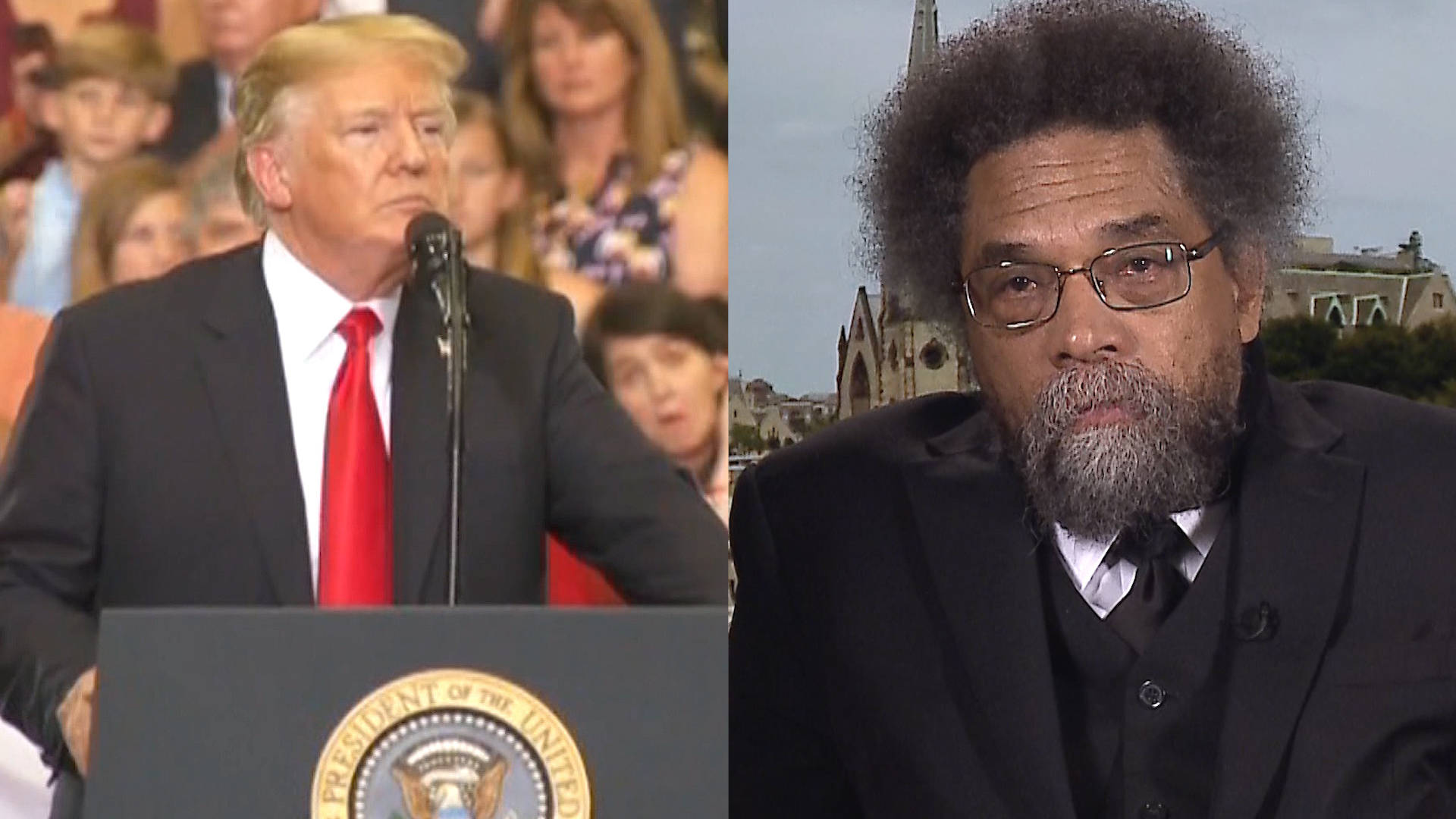
the rancid ideology of white supremacy. Cornel West is right in arguing that
neoliberal capitalism with its emphasis on materialism, racism and
cruelty “allows for endemic inequality and a culture of greed and
consumerism that [has trampled] on the rights and dignity of poor people
and minorities decade after decade.”
Sociologist Alex Vitale rightly insists that
calls for change regarding policing should not be about producing
“better” police through technocratic reforms such as the increased use
of body cameras and bias training, but rather with a “larger structure
of economic life in America.” In the age of neoliberal austerity, the
defunding of the welfare state has given way to a range of social
problems — extending from the criminalization of homeless people and the
relentless erasure of human rights to the mass proliferation of
surveillance and the placing of police in the schools — all of which
have contributed to the expansion of police power as a way to control
people removed from meaningful involvement in the broader global
economy. Turning over every social problem for the police to fix is more
than an impossible task; it is a failed, if not diversionary, political
decision.
Police violence can be understood as a form of systemic terror
instituted intentionally by different levels of government against
populations at home in order to realize economic gains and achieve
political benefits through practices that range from assassination,
extortion, incarceration, violence, and intimidation or coercion of a
civilian population. Some of the more notorious racist expressions of
such terror include the assassination of Black Panther Party leader Fred
Hampton by the Chicago Police Department on December 4, 1969; the MOVE
bombing by the Philadelphia Police Department in 1985; the existence of
COINTELPRO (an illegal counterintelligence program designed to harass
anti-war and Black resistance fighters in the 60s and 70s); the use of
extortion by the local police and courts practiced on the largely poor
Black residents of Ferguson; and the more publicized killings of Ma’Khia
Bryant, Breonna Taylor and George Floyd by the police — to name just a
few instances of acute state violence.
The American nightmare that has descended upon the United States
points to a crisis of power, agency, community, education and hope. The
effects of neoliberalism’s death-dealing-machinery are everywhere, and
police abuse is only one thread of this criminogenic social formation.
Rather than fade into the past or disappear beneath the propaganda
techniques of right- wing disimagination machines, widespread poverty,
racially segregated schools, rampant homelessness, ecological
destruction, large-scale rootlessness, fearmongering, social
atomization, voter suppression, and the politics of disposability are
alive and well. It is now unabashedly reproduced and defended by a
Republican Party that has become the overt symbol of white supremacy,
economic ruthlessness and manufactured ignorance.
“Calls for change regarding policing should not be about
producing ‘better’ police, but rather with a ‘larger structure of
economic life in America.’”
Widespread corruption is now matched by a climate of fear and a
willingness on the part of Trump’s political allies to inflict violence
on undesirable members of the public along with anyone voicing criticism
or dissent. The scaffold of resistance now faces a malignant fascist
politics growing across the globe. Fascist politics, especially in the
United States, has been on steroids, especially true both during Trump’s
reign in office and after his defeat, with the rule of the Republican
Party in Congress and among a majority of state legislatures. If the
systemic violence and lawlessness that denies Black communities a claim
to human rights, citizenship and dignity are to be challenged, it is
crucial to understand how neoliberal fascism becomes a machinery of
dread, tearing the social fabric, while cancelling the future. As a
regime of ideology, neoliberal fascism wages a political and pedagogical
war against the conditions that make thinking, agency, the search for
truth and informed judgment possible.
The heart of American violence does not reside merely in the culture
and practice of policing in the U.S., or for that matter, in its
prison-industrial complex. Its center of gravity is more comprehensive
and is part of a broader crisis that extends from the threat of nuclear
war and ecological devastation to the rise of authoritarian states and
the human suffering caused by the staggering concentrations of wealth in
the hands of a global financial elite. The roots of these multilayered
and intersecting crises lie elsewhere in a new political and social
formation that constitutes a racialized criminal economy that has
embraced greed, violence, disposability, denial and racial cleansing as
governing principles of the entire social order. This is the rule of
neoliberal fascism on steroids. It is also an extermination machine
rooted in a vapid nihilism that fuels the celebration of materialism and
social atomization with a belief in unshakable loyalty, purification
through violence and a cult of heroism.
It is crucial to understand how the threads of racial violence in its
broader historical context, comprehensive connections and
multidimensional layers shape capitalism in its totality to produce what
David Theo Goldberg calls a machinery of proliferating dread. It’s no
wonder that the same activists who are working to defund the police are
also part of a collective movement to bring an end to neoliberal
capitalism. Mariame Kaba writes :
People like me who want to abolish prisons and police, however, have a
vision of a different society, built on cooperation instead of
individualism, on mutual aid instead of self-preservation. What would
the country look like if it had billions of extra dollars to spend on
housing, food and education for all? This change in society wouldn’t
happen immediately, but the protests show that many people are ready to
embrace a different vision of safety and justice.
The challenge that Kaba and other abolitionists are posing does not
advocate for liberal reforms. Their call is to advance a radical
restructuring of society. Central to their call for social change is
that such a task be understood as both political and educational. This
necessitates the development of political and pedagogical struggles that
take seriously the need to rethink the attack on the public imagination
and attack on critical agency, identity and everyday life. Also at
stake is the need to identify and reclaim those institutions, such as
schools, that are necessary to produce and connect an educated public to
the struggle for a substantive and radical democracy. The current
crisis cannot be faced through limited calls for police reforms. It
demands a more comprehensive view not only of oppression and the forces
through which it is produced, legitimated and normalized, but also of
political struggle itself.


 /