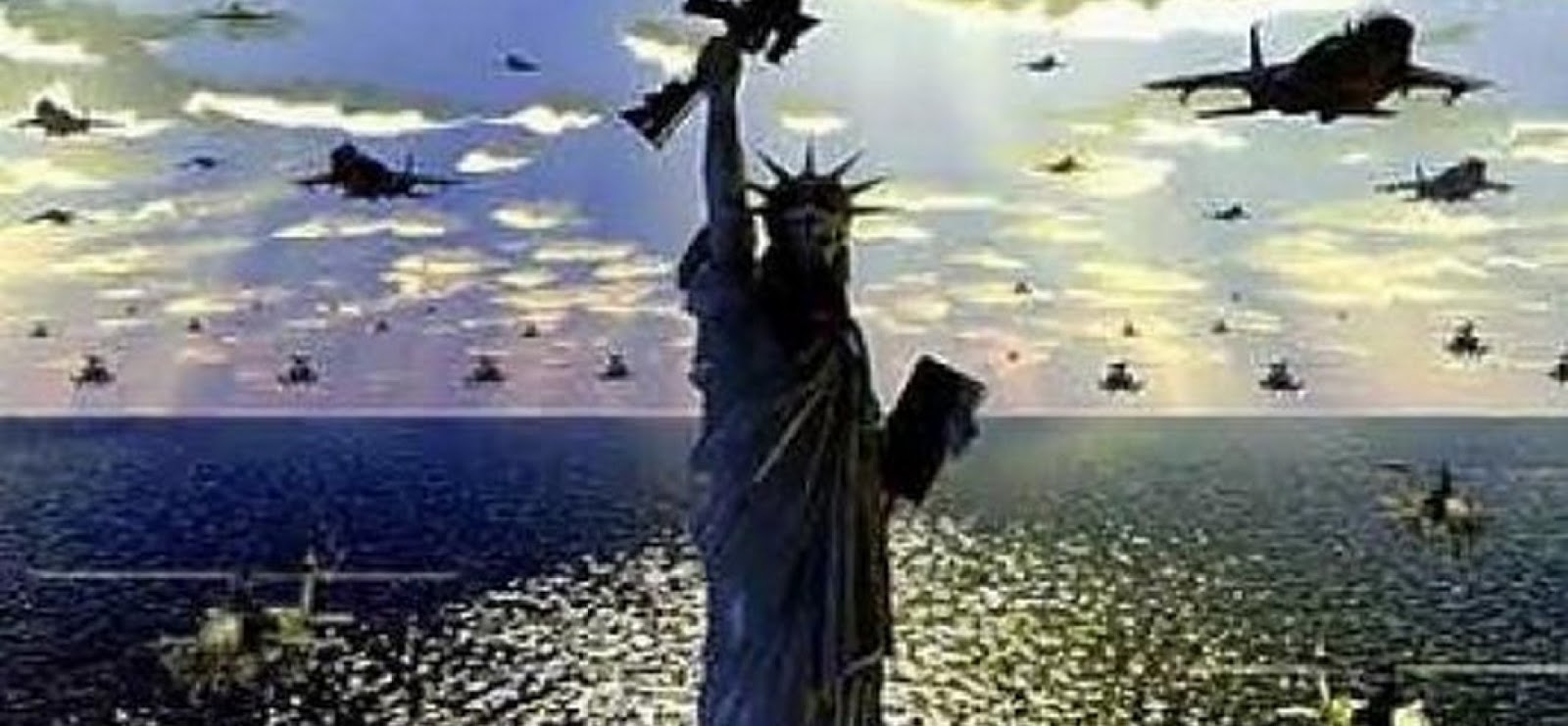
Like Cicero in the Roman Republic, there are always a handful of chroniclers who can see and articulate clearly the social, cultural, and political realities of empires in terminal decline. They call out the bankruptcy of an inept and corrupt ruling class, blinded by hubris, as well as a populace that has checked out of civic life and is entranced by bread and circus spectacles. In his trilogy “Blowback,” “The Sorrows of Empire,” and “Nemesis: The Last Days of the American Republic,” Chambers Johnson does a masterful job of showing how and why we are disintegrating. So does Andrew Bacevich, who, in his newest book of essays, “On Shedding an Obsolete Past: Bidding Farewell to the American Century,” writes about the debacles that have beset the American empire since the Vietnam war, a conflict he fought in as a young army officer. Bacevich warns that Americans’ inability to be self-critical, to dissect and understand the litany of disasters that have followed on the heels of Vietnam, including decades of fruitless warfare in the Middle East, will have terrible consequences for us and much of the rest of the globe.
The Carthaginian general Hannibal, who came close to defeating the Roman Republic in the Second Punic War, committed suicide in 181 BC in exile as Roman soldiers closed in on his residence in the Bithynian village of Libyssa, now modern-day Turkey. It had been more than thirty years since he led his army across the alps and annihilated Roman legions at the Battle of Trebia, Lake Trasimene and Cannae, considered one of the most brilliant tactical victories in warfare which centuries later inspired the plans of the German Army Command in World War I when they invaded Belgium and France. Rome was only able to finally save itself from defeat by replicating Hannibal’s military tactics.
It did not matter in 181 BC that there had been over 20 Roman emperors since Hannibal’s invasion. It did not matter that Hannibal had been hunted for decades and forced to perpetually flee, always just beyond the reach of Roman authorities. He had humiliated Rome. He had punctured its myth of omnipotence. And he would pay. With his life. Years after Hannibal was gone, the Romans were still not satisfied. They finished their work of apocalyptic vengeance in 146 BC by razing Carthage to the ground and selling its remaining population into slavery. Cato the Censor summed up the sentiments of empire: Carthāgō dēlenda est (Carthage must be destroyed). Nothing about empire, from then until now, has changed.
Imperial powers do not forgive those who expose their weaknesses or make public the sordid and immoral inner workings of empire. Empires are fragile constructions. Their power is as much one of perception as of military strength. The virtues they claim to uphold and defend, usually in the name of their superior civilization, are a mask for pillage, the exploitation of cheap labor, indiscriminate violence, and state terror.
The current American empire, damaged and humiliated by the troves of internal documents published by WikiLeaks, will, for this reason, persecute Julian Assange for the rest of his life. It does not matter who is president or which political party is in power. Imperialists speak with one voice. The killing of thirteen U.S. troops by a suicide bomber at the Hamid Karzai International Airport in Kabul on Thursday evoked from Joe Biden the full-throated cry of all imperialists: “To those who carried out this attack … we will not forgive, we will not forget, we will hunt you down and make you pay.” This was swiftly followed by two drone strikes in Kabul against suspected members of the Islamic State in Khorasan Province, ISKP (ISIS-K), which took credit for the suicide bombing that left some 170 dead, including 28 members of the Taliban.
The Taliban, which defeated U.S. and coalition forces in a 20-year war, is about to be confronted with the wrath of a wounded empire. The Cuban, Vietnamese, Iranian, Venezuelan and Haitian governments know what comes next. The ghosts of Toussaint Louverture, Emilio Aguinaldo, Mohammad Mossadegh, Jacobo Arbenz, Omar Torrijos, Gamal Abdul Nasser, Juan Velasco, Salvador Allende, Andreas Papandreou, Juan Bosh, Patrice Lumumba, and Hugo Chavez know what comes next. It isn’t pretty. It will be paid for by the poorest and most vulnerable Afghans.
The faux pity for the Afghan people, which has defined the coverage of the desperate collaborators with the U.S. and coalition occupying forces and educated elites fleeing to the Kabul airport, begins and ends with the plight of the evacuees. There were few tears shed for the families routinely terrorized by coalition forces or the some 70,000 civilians who were obliterated by U.S. air strikes, drone attacks, missiles, and artillery, or gunned down by nervous occupying forces who saw every Afghan, with some justification, as the enemy during the war. And there will be few tears for the humanitarian catastrophe the empire is orchestrating on the 38 million Afghans, who live in one of the poorest and most aid-dependent countries in the world.
Since the 2001 invasion the United States deployed about 775,000 military personnel to subdue Afghanistan and poured $143 billion into the country, with 60 percent of the money going to prop up the corrupt Afghan military and the rest devoted to funding economic development projects, aid programs and anti-drug initiatives, with the bulk of those funds being siphoned off by foreign aid groups, private contractors, and outside consultants.
Grants from the United States and other countries accounted for 75 percent of the Afghan government budget. That assistance has evaporated. Afghanistan’s reserves and other financial accounts have been frozen, meaning the new government cannot access some $9.5 billion in assets belonging to the Afghan central bank. Shipments of cash to Afghanistan have been stopped. The International Monetary Fund (IMF) announced that Afghanistan will no longer be able to access the lender’s resources.
Things are already dire. There are some 14 million Afghans, one in three, who lack sufficient food. There are two million Afghan children who are malnourished. There are 3.5 million people in Afghanistan who have been displaced from their homes. The war has wrecked infrastructure. A drought destroyed 40 percent of the nation’s crops last year. The assault on the Afghan economy is already seeing food prices skyrocket. The sanctions and severance of aid will force civil servants to go without salaries and the health service, already chronically short of medicine and equipment, will collapse. The suffering orchestrated by the empire will be of Biblical proportions. And this is what the empire wants.
UNICEF estimates that 500,000 children were killed as a direct result of sanctions on Iraq. Expect child deaths in Afghanistan to soar above that horrifying figure. And expect the same imperial heartlessness Madeline Albright, then the U.S. Ambassador to the United Nations, exhibited when she told “60 Minutes” correspondent Lesley Stahl that the deaths of half a million Iraqi children because of the sanctions was “worth it.” Or the heartlessness of Hillary Clinton who joked “We came, we saw, he died,” when informed of Libyan leader Muammar Qaddafi’s brutal death. Or the demand by Democratic Senator Zell Miller of Georgia who after the attacks of 9/11 declared, “I say, bomb the hell out of them. If there’s collateral damage, so be it.” No matter that the empire has since turned Libya along with Afghanistan, Iraq, Syria, and Yemen into cauldrons of violence, chaos, and misery. The power to destroy is an intoxicating drug that is its own justification.
Like Cato the Censor, the U.S. military and intelligence agencies are, if history is any guide, at this moment planning to destabilize Afghanistan by funding, arming, and backing any militia, warlord or terrorist organization willing to strike at the Taliban. The CIA, which should exclusively gather intelligence, is a rogue paramilitary organization that oversees secret kidnappings, interrogation at black sites, torture, manhunts, and targeted assassinations across the globe. It carried out commando raids in Afghanistan that killed a large number of Afghan civilians, which repeatedly sent enraged family members and villagers into the arms of the Taliban. It is, I expect, reaching out to Amrullah Saleh, who was Ashraf Ghani’s vice president and who has declared himself “the legitimate caretaker president” of Afghanistan. Saleh is holed up in the Panjashir Valley. He, along with warlords Afgand Massoud, Mohammad Atta Noor and Abdul Rashid Dostum, are clamoring to be armed and supported to perpetuate conflict in Afghanistan.
“I write from the Panjshir Valley today, ready to follow in my father’s footsteps, with mujahideen fighters who are prepared to once again take on the Taliban,” Ahmad Massoud wrote in an opinion piece in The Washington Post. “The United States and its allies have left the battlefield, but America can still be a ‘great arsenal of democracy,’ as Franklin D. Roosevelt said when coming to the aid of the beleaguered British before the U.S. entry into World War II,” he went on, adding that he and his fighters need “more weapons, more ammunition and more supplies.”
These warlords have done the bidding of the Americans before. They will do the bidding of the Americans again. And since the hubris of empire is unaffected by reality, the empire will continue to sow dragon’s teeth in Afghanistan as it has since it spent $9 billion—some estimates double that figure—to back the mujahedeen that fought the Soviets, leading to a bloody civil war between rival warlords once the Soviets withdrew in 1989 and the ascendancy in 1996 of the Taliban.
The cynicism of arming and funding the mujahedeen against the Soviets exposes the lie of America’s humanitarian concerns in Afghanistan. One million Afghan civilians were killed in the nine-year conflict with the Soviets, along with 90,000 mujahedeen fighters, 18,000 Afghan troops, and 14,500 Soviet soldiers. But these deaths, along with the destruction of Afghanistan, were “worth it” to cripple the Soviets.
Jimmy Carter’s national security advisor, Zbigniew Brzezinski, along with the Pakistan’s Inter-Services Intelligence (ISI) agency, oversaw the arming of the most radical Islamic mujahedeen groups fighting the Soviet occupation forces, leading to the extinguishing of the secular, democratic Afghan opposition. Brzezinski detailed the strategy, designed as he said to give the Soviet Union its Vietnam, taken by the Carter administration following the 1979 Soviet invasion to prop up the Marxist regime of Hafizullah Amin in Kabul:
We immediately launched a twofold process when we heard that the Soviets had entered Afghanistan. The first involved direct reactions and sanctions focused on the Soviet Union, and both the State Department and the National Security Agency prepared long lists of sanctions to be adopted, of steps to be taken to increase the international costs to the Soviet Union of their actions. And the second course of action led to my going to Pakistan a month or so after the Soviet invasion of Afghanistan, for the purpose of coordinating with the Pakistanis a joint response, the purpose of which would be to make the Soviets bleed for as much and as long as is possible; and we engaged in that effort in a collaborative sense with the Saudis, the Egyptians, the British, the Chinese, and we started providing weapons to the Mujaheddin, from various sources again — for example, some Soviet arms from the Egyptians and the Chinese. We even got Soviet arms from the Czechoslovak communist government, since it was obviously susceptible to material incentives; and at some point we started buying arms for the Mujahedeen from the Soviet army in Afghanistan, because that army was increasingly corrupt.
The clandestine campaign to destabilize the Soviet Union by making it “bleed for as much and as long as is possible” was carried out, like the arming of the contra forces in Nicaragua, largely off the books. It did not, as far as official Washington was concerned, exist, a way to avoid the unwelcome scrutiny of covert operations carried out by the Church Committee hearings in the 1970s that made public the three decades of CIA-backed coups, assassinations, blackmail, intimidation, dark propaganda, and torture. The Saudi government agreed to match the U.S. funding for the Afghan insurgents. The Saudi involvement gave rise to Osama bin Laden and Al Qaeda, which fought with the mujahedeen. The rogue operation, led by Brzezinski, organized secret units of assassination teams and paramilitary squads that carried out lethal attacks on perceived enemies around the globe. It trained Afghan mujahedeen in Pakistan and China’s Xinjiang province. It shifted the heroin trade, used to fund the insurgency, from southeast Asia to the border between Afghanistan and Pakistan.
This pattern of behavior, which destabilized Afghanistan and the region, is reflexive in the military and the intelligence community. It will, without doubt, be repeated now in Afghanistan, with the same catastrophic results. The chaos these intelligence agencies create becomes the chaos that justifies their existence and the chaos that sees them demand more resources and ever greater levels of violence.
All empires die. The end is usually unpleasant. The American empire, humiliated in Afghanistan, as it was in Syria, Iraq, and Libya, as it was at the Bay of Pigs and in Vietnam, is blind to its own declining strength, ineptitude, and savagery. Its entire economy, a “military Keynesianism,” revolves around the war industry. Military spending and war are the engine behind the nation’s economic survival and identity. It does not matter that with each new debacle the United States turns larger and larger parts of the globe against it and all it claims to represent. It has no mechanism to stop itself, despite its numerous defeats, fiascos, blunders and diminishing power, from striking out irrationally like a wounded animal. The mandarins who oversee our collective suicide, despite repeated failure, doggedly insist we can reshape the world in our own image. This myopia creates the very conditions that accelerate the empire’s demise.
The Soviet Union collapsed, like all empires, because of its ossified, out-of-touch rulers, its imperial overreach, and its inability to critique and reform itself. We are not immune from these fatal diseases. We silence our most prescient critics of empire, such as Noam Chomsky, Angela Davis, Andrew Bacevich, Alfred McCoy, and Ralph Nader, and persecute those who expose the truths about empire, including Julian Assange, Edward Snowden, Daniel Hale, and John Kiriakou. At the same time a bankrupt media, whether on MSNBC, CNN or FOX, lionizes and amplifies the voices of the inept and corrupt political, military and intelligence class including John Bolton, Leon Panetta, Karl Rove, H.R. McMaster and David Petraeus, which blindly drives the nation into the morass.
Chalmers Johnson in his trilogy on the fall of the American empire – “Blowback,” “The Sorrows of Empire” and “Nemesis” – reminds readers that the Greek goddess Nemesis is “the spirit of retribution, a corrective to the greed and stupidity that sometimes governs relations among people.” She stands for “righteous anger,” a deity who “punishes human transgression of the natural, right order of things and the arrogance that causes it.” He warns that if we continue to cling to our empire, as the Roman Republic did, “we will certainly lose our democracy and grimly await the eventual blowback that imperialism generates.”
“I believe that to maintain our empire abroad requires resources and commitments that will inevitably undercut our domestic democracy and, in the end, produce a military dictatorship or its civilian equivalent,” Johnson writes. “The founders of our nation understood this well and tried to create a form of government – a republic – that would prevent this from occurring. But the combination of huge standing armies, almost continuous wars, military Keynesianism, and ruinous military expenses have destroyed our republican structure in favor of an imperial presidency. We are on the cusp of losing our democracy for the sake of keeping our empire. Once a nation is started down that path, the dynamics that apply to all empires come into play – isolation, overstretch, the uniting of forces opposed to imperialism, and bankruptcy. Nemesis stalks our life as a free nation.”
If the empire was capable of introspection and forgiveness, it could free itself from its death spiral. If the empire disbanded, much as the British empire did, and retreated to focus on the ills that beset the United States it could free itself from its death spiral. But those who manipulate the levers of empire are unaccountable. They are hidden from public view and beyond public scrutiny. They are determined to keep playing the great game, rolling the dice with lives and national treasure. They will, I expect, preside gleefully over the deaths of even more Afghans, assuring themselves it is worth it, without realizing that the gallows they erect are for themselves.
Pulitzer Prize –winning reporter Chris Hedges talks about his new book, America: The Farewell Tour. In it he goes deep into how the opioid crisis; the retreat into gambling to cope with economic distress; the pornification of culture; the rise of magical thinking; the celebration of sadism, hate, and plagues of suicides are the physical manifestations of a society that is being ravaged by corporate pillage and a failed democracy. Where do we, as a people and a planet, go next?
By the final decade of the 19th century, the American project sanctified as Manifest Destiny was complete. The western boundary of the United States now stretched to the Pacific Ocean, leaving in its wake the genocide of Native Americans, the purchase of Louisiana withoutthe consent of the governed, and a war of aggression against Mexico. What next? Pursue the colonialist mandate beyond continental borders—or not?
Stephen Kinzer’s “The True Flag: Theodore Roosevelt, Mark Twain, and the Birth of the Empire” is a compact, bracing history of the answer to What next? It features the drama and decisions of four years—1898-1902—that, in Kinzer’s thesis, set the course of American wars, military expansion and the overthrow of governments throughout the 20th and into the 21st century, interrupted with brief, impermanent periods of “isolationism.”
The author collates the eloquent rhetoric and caustic debates between expansionist members of Congress, including alpha male Theodore Roosevelt, aristocrat Henry Cabot Lodge, media giant William Randolph Hearst, and prominent anti-empire social critics and populist orators including Mark Twain, William Jennings Bryan and steel magnate and philanthropist Andrew Carnegie to capture vividly the divided political passions and high stakes of the day.
The empire builders used robust, positively coded terms like “the large policy” to label their aspirations for America’s pre-eminence among world powers and for the aggressive market ambitions of America’s capitalists. The anti-imperialists warned of the erosion of democracy at home, the rise of plutocracy and the blowback from military subordination of other peoples against their will, forecasting what, a century later, Chalmers Johnson incisively named the “sorrows of empire.”
The Spanish-American War of 1898 was the spark that inflamed the U.S. quest for overseas colonies. It began with Cuba and quickly stole Puerto Rico, then the Philippines, Guam (seized en route to the Philippines) and Hawaii—all in nine months. In public, expansionists framed these takeovers as beneficent: rescuing oppressed and backward people to catechize and civilize them.
Independence movements in Cuba, the Philippines and Hawaii were brutally suppressed. Hundreds of thousands of people were killed, particularly in the Philippines, which waged guerrilla warfare until its defeat in 1902. While American soldiers tortured and assassinated prisoners, burned villages and killed farm animals (a precursor to the later American War in Vietnam), a pliant press followed military orders and carried no unfavorable coverage.
The war in the Philippines was intensely terrorizing for women in particular. The Anti-Imperialist Review reported that “American soldiers had turned Manila into a world center of prostitution.” Amplifying this too-brief reference to the extreme toll of U.S. militarism on women, Janice Raymond writes in “Not a Choice, Not a Job,” that “U.S. prostitution colonialism, especially during the Philippine-American War, created the model for the U.S. military–prostitution complex in all parts of the world.” The system “assured U.S. soldiers certified sexual access to Filipinas and … became an intrinsic part of colonial practice in Cuba and Puerto Rico.”
Meanwhile, the empire seekers rubbed their covetous hands over the prospect of new customers for manufactured goods, and, in the case of the Philippines, a springboard to the Chinese and Japanese markets. Military bases in the Philippines and Guam would follow to protect and project U.S. economic and military power in East Asia.
Kinzer’s considerable talent joins meticulous research and engaging stories with a canine ability to sniff out the lies beneath the platitudes that sold the public on war. What he foregrounds so credibly are the oversize male egos of “large policy” politicians with more morally grounded and prescient anti-imperialist crusaders. Among these are Booker T. Washington, who, in speaking against U.S. imperialism abroad, warned that the cancer in our midst—racism, the legacy of slavery—will prove to be as dangerous to the country’s well-being as an attack from without. Many African-American anti-imperialist groups emerged and assailed U.S. imperialism for its intrinsic white racist arrogance.
With much detail and nuance, Kinzer tracks the fatal flaws of the immensely talented and populist orator William Jennings Bryan who, for his contrarian vote that sealed the doom of the Philippines, helped determine the fate of our country’s future as an empire. Likewise, the seemingly passive-aggressive William McKinley, elected in 1896 and again in 1900, is unmasked as the imperialist he grew to be over the course of his presidency.
The final chapter, “The Deep Hurt,” traces the arc of U.S. militarism across the 20th century and into the 21st—a long and unfinished arc that is neither moral nor bends toward justice. At each end of this ongoing arc, the words of two military veterans of U.S. foreign wars distill andcorroborate Kinzer’s stateside exposé in “The True Flag.” Brig. Gen. Smedley Butler, born in 1881, began his career as a teenage Marine combat soldier assigned to Cuba and Puerto Rico during the U.S. invasion of those islands. He fought next in the U.S. war in the Philippines, ostensibly against Spanish imperialism but ultimately against the Philippine revolution for independence. Next he was assigned to fight against China during the Boxer Rebellion and was also stationed in Guam. He gained the highest rank and a host of medals during subsequent U.S. occupations and military interventions in Central America and the Caribbean, popularly known as the Banana Wars.
As Butler confessed in his iconoclastic book, “War Is a Racket,” he was “a bully boy for American corporations,” making countries safe for U.S. capitalism. More isolationist than anti-war, he nonetheless nailed the war profiteers—racketeers, in his unsparing lexicon—or the blood on their hands, as bracingly as any pacifist. War is the oldest, most profitable racket, he wrote—one in which billions of dollars are made for millions of lives destroyed.
Making the world “safe for democracy” was, at its core, making the world safe for war profits. Of diplomacy Butler wrote, “The State Department … is always talking about peace but thinking about war.” He proposed an “Amendment for Peace”: In essence, keep the military (Army, Navy, Air Force) on the continental U.S. for the purpose of defense against military invasions here.
And in the 21st century, Maj. Danny Sjursen, who served tours with reconnaissance units in Iraq and Afghanistan, proposes that the Department of Defense should be renamed the Department of Offense. His reasons: American troops are deployed in 70 percent of the world’s countries; American pilots are currently bombing seven countries; and the U.S., alone among nations, has divided the six inhabited continents into six military commands. Our military operations exceed U.S. national interests and are “unmoored” from reasoned strategy and our society’s needs, Sjursen concludes.
For all of this book’s strengths, one glaring lacuna is the minimalist presence of women in Kinzer’s depiction of the early anti-imperialist movement. “The True Flag” is premised on history as made by “great men”—good and bad. A “great woman” of this era, Jane Addams, elected vice-president of the Anti-Imperialist League after a brilliant speech, has only a bit part. Addams was renowned not only for her settlement house work at Hull House in Chicago, but also for speaking out unceasingly against imperialism and war. The FBI kept a file on her, and she was labeled among the most dangerous women in America. The author overlooked her influence in this era.
A second lacuna is omitting the original sins of imperial America: the genocide of Native Americans for their land, and the enslavement of Africans, which ultimately became the combustion engine of U.S. capitalism. Ironically, it was the pro-empire exhorters of 1898 who used the exploitative expansion within the early U.S. to defend extending Manifest Destiny to the Pacific region. “If we should not do this in the Philippines, why was it acceptable to do here?” challenged Henry Cabot Lodge, the imperialist senator from Massachusetts.
The Lebanese poet Khalil Gibran could have penned these words from 1933 for our national dilemma today: Pity the nation that acclaims the bully as hero and that deems the glittering conqueror bountiful. … ******************************************************************************************* H. Patricia (Pat) Hynes is a retired environmental engineer and professor of environmental health who worked on such issues as the low-income, multiracial urban environment (including lead poisoning, asthma
This film is both tragic & beautiful for obvious reasons. The following poem is from an Afghan poet writing in the imagined voice of a 10 year old girl from Kandahar reflecting on 10 years of U.S./NATO warfare in Afghanistan:
Who says this must be so?
Who cares that this is so?
I shudder that the raids and bombs
have made us less than human.
I wish to go to our deserted schools
to understand why we are like this.
I used to dream of spaces,
blue skies and gentler people.
I heard mother through her burqa
pleading please ‘Stop!’
‘Stop the money. Stop the killing.
Stop.’
Another local explosion,
more international lies.
Our global problem is that
guns impose greater force
than common sense
or vision, which tells me
that my mother’s world is crashing.
It's crazy what is happening to the people of Afghanistan--the United States continues to afflict them with vile maneuvers to control their resources, perpetuate violence as a justification for maintaining its operating bases, the building of a U.S. Embassy soon to become the largest in the world, three major prisons & an unspecified number of detention sites. What a shame that our economic system has to continue to maintain itself on the blood, sweat, tears and resources of others with such reckless impunity. Call it imperialism, neocolonialism or the sorrows of empire--I call it just plain evil.
Chalmers Johnsonpassed away last Saturday (11/20/10) and with him goes the dimming of another light in this increasingly desolate & angst-ridden world. After reading his book,"The Sorrows of Empire: Militarism, Secrecy, and the End of the Republic" a few years back, I became a student of his work. This man knew what he was talking about as he was once a consultant in the bowels of the C.I.A, and saw first-hand the official agendas, secret strategies & backroom deals of empire. Many people shy away from the uncomfortable truths of their nation as they tend to invalidate or challenge cherished beliefs they would much rather like to hold on to. I find people like this quite dangerous (& utterly pathetic!), and it would serve them well to ponder what Chalmers Johnson has to say in the following interview: